
About Gossweiler Dentistry
The office provides general and rehabilitative care, and its restorative range spans porcelain and gold inlays and onlays, composite resin and resin-reinforced glass ionomer fillings, porcelain, zirconia, gold and porcelain-fused-to-gold crowns, bridges, implant crowns and veneers, with microscope-aided dental surgery among the listed services. The practice describes itself as a mercury-free office: it states a concern about patient exposure to mercury, notes that vapour is released during and after the placement of mercury-containing fillings as well as during their removal, and no longer places amalgam. Alternative materials are stocked or ordered on request, with the trade-offs of each discussed before treatment. Its clinicians are recorded with the International Academy of Oral Medicine and Toxicology.
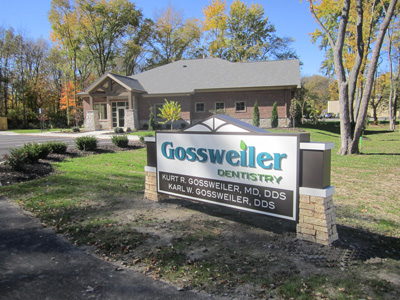
Photos from the clinic’s website. Something wrong, or is this your clinic? Email hello@biomimeticclinics.com.
Credentialed Clinician
Kurt Gossweiler
AccreditedIAOMT recordverified 22 October 2026
Procedures
Clinic Details
- Address: 7951 Crawfordsville Rd., Indianapolis, IN 46214
- Telephone: 3172930965
- Website: http://www.gossweilerdentistry.com/
- City: Indianapolis, IN (all Indiana clinics)
Common Questions
Does this office place amalgam (silver) fillings?
No. The office states that it is a mercury-free practice and no longer uses mercury-containing amalgam fillings, citing independent research that mercury vapour is released during and after placement, and during removal, of these restorations. It notes that other filling materials developed in recent years can replace amalgam without exposing a patient to mercury vapour or elemental mercury, and invites patients who want to review those options to telephone the office for a consultation.
Which materials does the practice use for inlays, onlays and crowns?
Recorded restorative materials include porcelain and gold inlays and onlays, composite resin for smaller non-load-bearing areas, and resin-reinforced glass ionomer. Crowns are listed in porcelain, zirconia, gold and porcelain fused to gold. The office states that it selects gold for function and high-strength service, porcelain for strength and appearance, and high-strength metal-free porcelain where esthetics govern a bridge.
Can I ask about alternative materials before treatment is planned?
Yes. The practice states that alternative materials are available for use or can be ordered, and asks patients to raise the question so the pros and cons of each option can be discussed.
What does the office use for oral cancer screening?
Oral cancer screening is performed with a Velscope, which the office states fluoresces normal tissue and so helps visualize and decide which tissue appears healthy and which may warrant biopsy. It is explicit that the instrument is not a substitute for the dentist's own judgment and observation. Biopsies are listed among the services provided.
Does the practice handle extractions and specialist care itself, or refer out?
The office states that one of its dentists has had special training in the extraction of teeth and treats most patients in-house, while still referring some cases. For work outside its scope it maintains a network of specialists it consults regularly, covering endodontics, pedodontics, periodontics, oral and maxillofacial surgery and orthodontics. Wisdom tooth removal is listed with and without IV or oral sedation.
How long has the practice been in Indianapolis, and who runs it?
The practice was founded in 1962 by a dentist who completed his dental education in Germany, then continued it after moving to Cincinnati and finally Indianapolis, where he has provided general and rehabilitative dentistry. Some staff members have been with the office more than thirty years.