
About WholeHealth Family Dentistry
WholeHealth Family Dentistry in Pewaukee, Wisconsin combines biomimetic and biological dentistry, with a stated focus on conserving natural tooth structure. The clinic describes its biomimetic work as minimally invasive treatment that seals and preserves teeth: air abrasion removes only the decayed or deteriorating portion of a tooth, and stress-reduced composite restorations are used with the aim of avoiding crowns and root canals in most cases. Where a tooth is already beyond what a direct restoration can repair, inlays and onlays are layered to rebuild it.
Biological treatment is framed around the oral-systemic connection, the clinic stating that the materials used and the procedures performed have potential whole-body effects. Listed services include safe mercury amalgam removal, ozone dentistry, BPA-free and metal-free biocompatible materials, biocompatible materials testing support, biological extractions and periodontal therapy, zirconia implants and fluoride-free care. Hygiene visits use Guided Biofilm Therapy, microscopic evaluation of plaque samples and oral DNA testing. One patient is seen at a time.


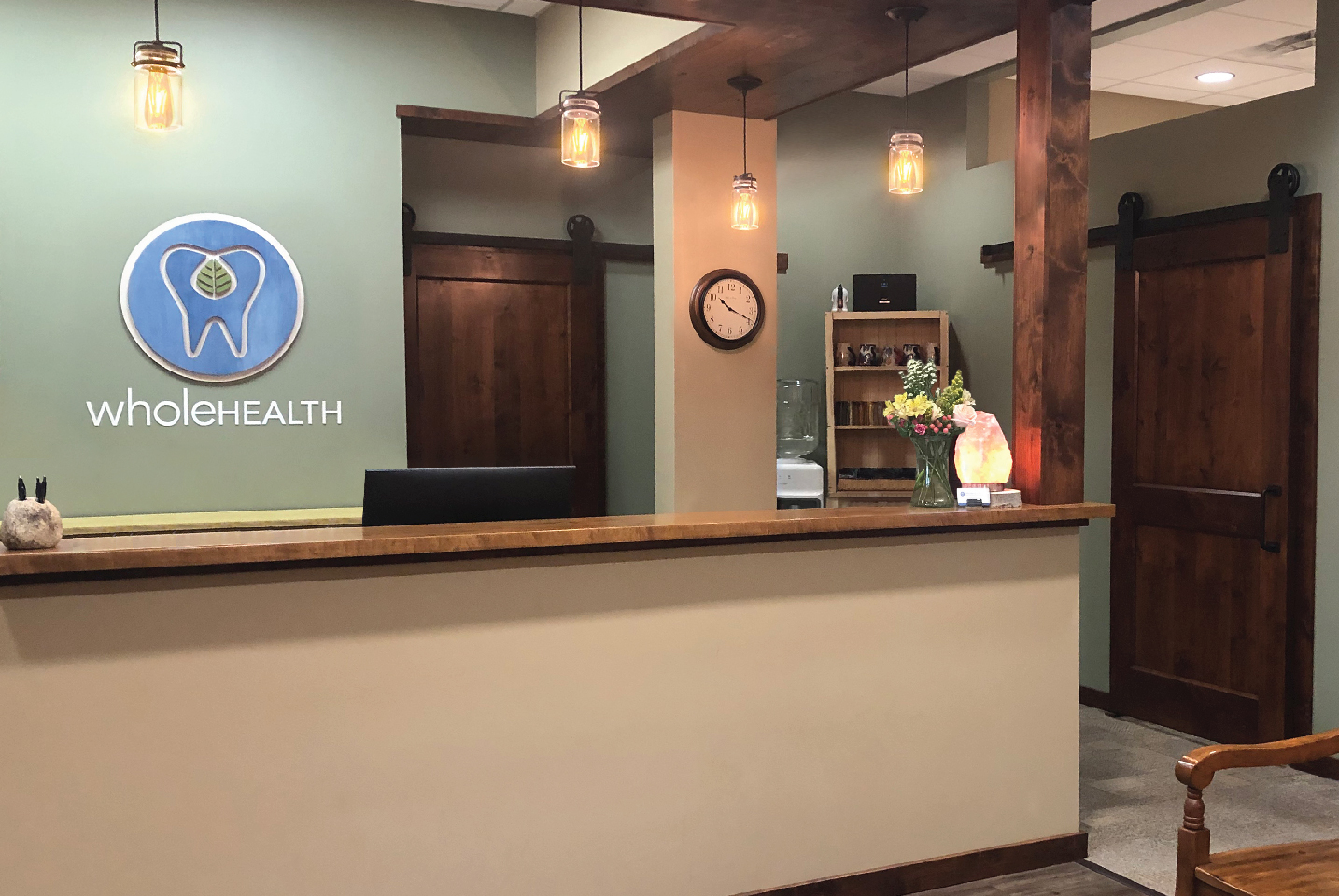

Photos from the clinic’s website. Something wrong, or is this your clinic? Email hello@biomimeticclinics.com.
Credentialed Clinician
Dr. Bryan Schwartz DDS
HDA member AccreditedHDA recordverified 27 October 2026
AOBMD recordverified 27 October 2026
IAOMT recordverified 27 October 2026
Procedures
Clinic Details
- Address: 125 W Wisconsin Ave, Suite 102, Pewaukee, WI 53072
- Telephone: (262) 737-4004
- Website: https://wholehealthfamilydentistry.com/
- City: Pewaukee, WI (all Wisconsin clinics)
Common Questions
How does this clinic restore a decayed or broken tooth without a crown?
The clinic states that stress-reduced composite restorations allow it to avoid crowns and root canals in most if not all cases, and that biomimetic technique eliminates the need for crowns and reduces the need for root canals by ninety percent. Where a tooth is already past what a direct restoration can repair, inlays and onlays are layered to rebuild the tooth's integrity rather than cutting it down for a cap.
What is air abrasion, and when is it used instead of a drill?
Air abrasion is described by the clinic as a replacement for the drill that removes only the decayed portion of the tooth, often requiring little or no anesthetic. The stated goal is to remove the least tooth structure possible, after which advanced adhesive materials are used to fill the cavity and create a strong but flexible bond that lets the tooth continue to function.
What biological services does the clinic list for patients with mercury fillings or metal sensitivities?
Safe mercury amalgam removal is listed among the clinic's biological services, alongside mercury-free and metal-free restorations, BPA-free biocompatible materials, biocompatible materials testing support, biological extractions, biological periodontal therapy, ozone dentistry, zirconia implants, non-metal partials and fluoride-free care.
What happens during a hygiene visit here?
Hygiene visits use Guided Biofilm Therapy. Calculus and stain are then removed with an ultrasonic instrument, using less metal hand instrumentation.
Why does the clinic examine plaque under a microscope, and what is oral DNA testing for?
Hygienists sample plaque and biofilm and prepare a microscope slide as part of the oral assessment, shown in the hygiene room. The screening looks at microbial shapes and motility associated with periodontal disease, decay, yeast and protozoa. If microbes are at a high level, an oral DNA test can be sent to a laboratory to identify which pathogens are present.
What imaging does the clinic use?
The clinic provides low dose 2D and 3D digital radiographs, stating that digital x-rays can reduce patient exposure by eighty to ninety percent compared with film-based radiography. It uses 3D imaging as a diagnostic tool to evaluate infection deep within the teeth and the surrounding bone, including the evaluation of root canal treated teeth.