
About Opal Dental Studio
Opal Dental Studio is a family-owned biological dental studio on Gilead Rd in downtown Huntersville, drawing patients from Cornelius, Davidson, Mooresville and the wider Lake Norman area. The clinic's stated premise is that the mouth is treated as part of the whole body: biocompatible, metal-free materials, SMART amalgam removal performed with mercury-safe handling, fluoride-optional prevention, and saliva testing used to identify the cause of decay and gum trouble rather than repeat repairs on its consequences.
The recorded procedure range runs from pediatric and routine care through onlays, veneers, crowns, implants and full-arch restoration, with occlusal splints, nightguards and other therapies for TMD/TMJ concerns. Diagnostics include digital radiographs, cone beam 3D scanning, intraoral scanning and oral cancer screening. Full mouth reconstruction is planned around the bite first. The clinic is not in-network with any insurance company and files claims as a courtesy.


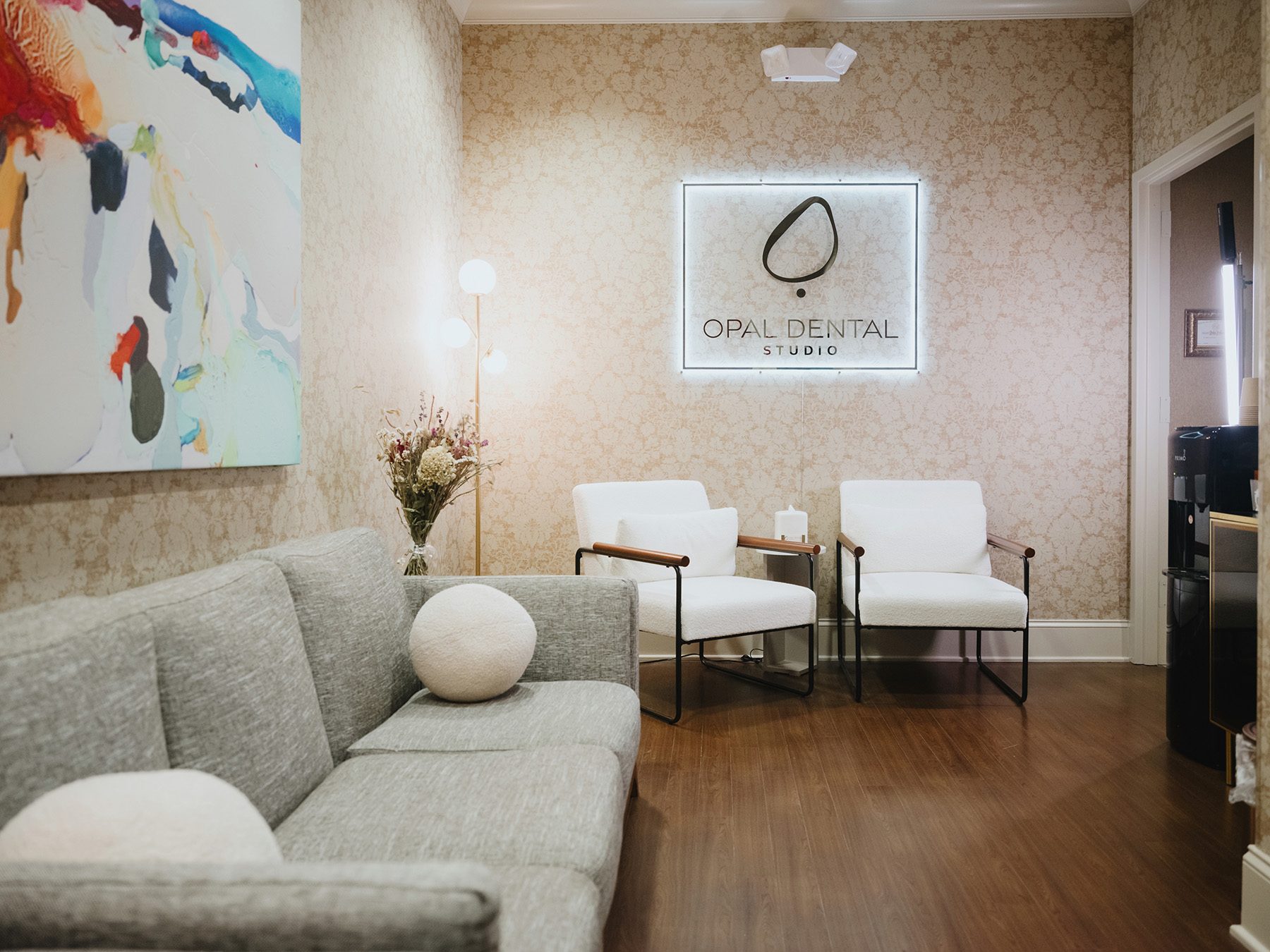
Photos from the clinic’s website. Something wrong, or is this your clinic? Email hello@biomimeticclinics.com.
Credentialed Clinician
Abigail Gonzales
IAOMT memberIAOMT recordverified 27 October 2026
Procedures
Clinic Details
- Address: 403 Gilead Rd, Suite M, Huntersville, NC 28078
- Telephone: (704) 892-4431
- Website: http://opaldentalstudio.com
- City: Huntersville, NC (all North Carolina clinics)
Common Questions
What does biological dentistry mean at this clinic?
The clinic states that biological dentistry treats the mouth as part of the whole body. In practice that means biocompatible, metal-free materials, avoiding unnecessary chemicals, SMART amalgam removal with mercury-safe handling, fluoride-optional prevention, and saliva testing that looks for the cause of decay and gum problems instead of only repairing the damage.
What happens during a gum health evaluation?
Pocket depths are measured around every tooth with a periodontal probe, alongside bleeding on probing, recession and tooth mobility. Digital X-rays and cone beam 3D imaging are used to assess bone levels when the clinical picture calls for it, and medical history, including diabetes and medications, is reviewed because it affects how the tissue behaves and heals.
How does the clinic treat periodontitis once it is below the gumline?
Scaling and root planing is the primary non-surgical treatment: plaque and hardened tartar are removed from below the gumline and the root surfaces smoothed so tissue can reattach. Treatment is done in sections with local anesthetic. Afterward, routine cleanings are replaced by periodontal maintenance visits, typically every three to four months.
Does the clinic take insurance?
It states it is not in-network with any insurance company, so treatment planning is driven by clinical need rather than an insurance contract. Claims are still filed as a courtesy to help patients use available benefits, and many plans cover scaling and root planing at least partially.